By Trevor Vaughn | 25 September 2026
Fans were strongly negative towards the ending of these shows, but unmet expectations and poor writing are two different things.
And will I tell you that these three lived happily ever after? I will not, for no one ever does. But there was happiness. And they did live. -Stephen King
I don’t watch much television. I’m subscribed to most of the major streaming services, and I’m mandated by my apartment to have cable. But for me, television is mostly just noise to have on in the background while I am doing other things at home. I am much more interested in watching movies, reading books, playing video games, or venturing out in the world. That said, whenever I get into a show, I become very invested. If the story of a series can pull me in the same way a great novel, film, or game can, then you are doing something right. The first series that had that power over me was the American remake of The Office. And this was not during its imperial run; It was long after the finale had aired. In retrospect, this ended up being a net positive. Aside from the ability to binge the entire nine-season series, watching The Office long after it had become a pop culture touchstone meant that I knew I was in for: a cringe-inducing but witty and fun journey through the lives of the Dunder Mifflin Paper Company employees. The show’s legacy also prepared me for the series finale, which has been touted as a heartfelt and satisfying ending for the story of Pam, Jim, Dwight, and…Michael?
Yes, despite my years-late venture into The Office, I didn’t know Steve Carell’s Michael Scott would make a brief appearance in the finale after having left two seasons ago. What a glorious surprise it was! It tied in perfectly with the story, was touching, and had the best use of Michael Scott’s immortal catchphrase. But here’s the thing: I did not need Michael to show up for me to have enjoyed this finale. It was a welcome surprise. But outside of Michael’s cameo, The Office’s finale was a well-written send-off that brought the character arcs, themes, and storylines full circle. I have no doubt that Michael’s appearance was a crowd-pleasing moment, but that’s not what made this show stick the landing.
I bring up The Office as an example of a series ending strong and thus cementing its well-regarded reputation. Because the truth is that an ending can ruin an entire story. It can damage a show’s reputation, even if it did most things well on the way to that ending. Perhaps the most recent example of a fall from grace is Game of Thrones. This show was a game changer for HBO, the fantasy genre, and television in general. But its finale, “The Iron Throne”, was so poorly received, and so largely despised by the fans, that the show lost nearly all its cultural cachet. What did “The Iron Throne” do so wrong? Well, the consensus was that Daenerys Targaryen’s (Emilia Clarke) transition from heroic liberator to tyrannical villain in the penultimate episode was abrupt and unearned. And since this character arc made little sense, it made her death at the hands of Jon Snow (Kit Harington) both dissatisfying from a fan perspective, but also a failure of storytelling. The dissatisfaction “The Iron Throne” delivered to fans was the main outcry, but the failure to craft a logical resolution was the bigger offence.
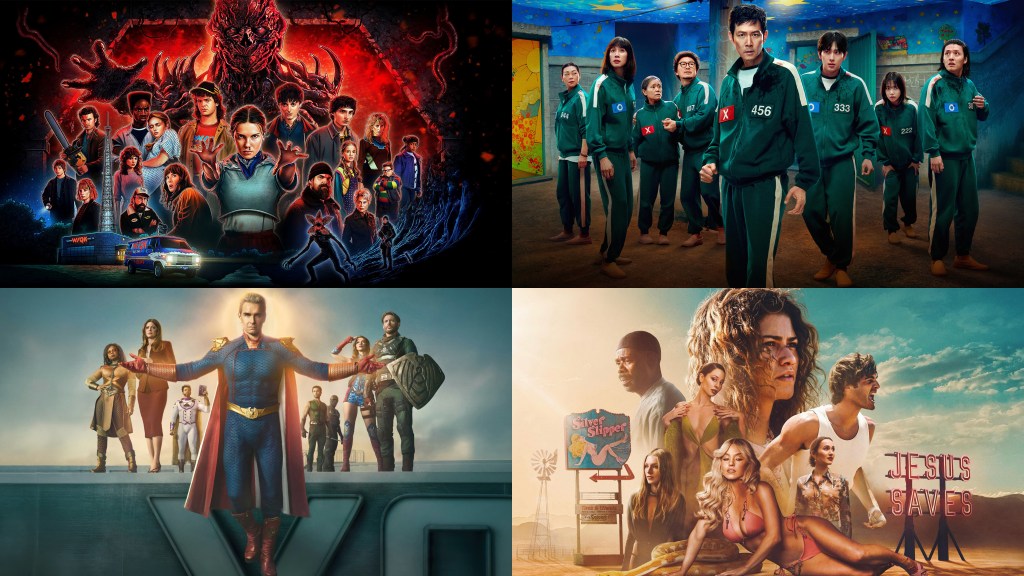
This brings us to the years 2025 and 2026, when four of the most popular shows of the past ten years sang their swan song. I’m talking about the supernatural phenomenon Stranger Things, the dystopian juggernaut Squid Game, the superhero satire The Boys, and the buzzy teen drama Euphoria. These four shows had dedicated fanbases, were huge points of online discussion, and were critically acclaimed. But when each of these shows premiered their finales, they were met with uproarious vitriol. Fans proclaimed that these finales were not just disappointing, but terrible enough to tarnish the notoriety of the shows. I have spent the past eight months seeing nothing but outcries from fans online about how poor these finales were. Apparently, these were Game of Thrones bad, and clearly Hollywood (and South Korea) just does not know how to end a series anymore, right?
Look, I can see why any of these endings would upset fans. While I am a fan of all four of these shows, I can concede that they were all plagued by final seasons that were either weak or downright baffling. All these shows stumbled in their 11th hour. However, I can’t help but notice that when it comes to criticisms of these finales specifically, a large majority of the complaints come down to what fans either expected or wanted from the ending. Now, there’s nothing wrong with pleasing fans. But as noted with The Office, it is more important that a story has a logical resolution that makes the whole journey worth it. When it came to the conclusions of these shows, it appears that the writers prioritized making them narratively satisfying as opposed to crowd-pleasing. But it’s 2026, when fans will burn it all down if they don’t get what they want. So now we have four series that will join the Game of Thrones club. But in my minuscule blog efforts, I will make the case that the finales of Squid Game, Euphoria, Stranger Things, and The Boys were all perfectly fine conclusions. They may not have left you with a great feeling, but that does not mean you experienced a weak ending.
Squid Game’s pessimistic conclusion fits into the themes of the series
Hwang Dong-hyuk’s Squid Game first premiered on Netflix on September 17, 2021. It quickly caught fire, becoming a global sensation and Netflix’s most-watched series of all time. And yes, that was meant to be a play on words, because Squid Game is pure dystopia. Not as methodically thought out as The Hunger Games, but nonetheless, it is a cautionary tale of society; a crystal ball image of how bad things could get if we don’t change our ways. The main target of Squid Game’s critique is capitalism, with the characters competing in deadly versions of children’s games to win a giant cash prize. And like a lot of modern dystopian fiction, Squid Game centers on one character who seeks to upend the system. That character is Seong Gi-hun, AKA Player 456, as portrayed by Lee Jung-jae.
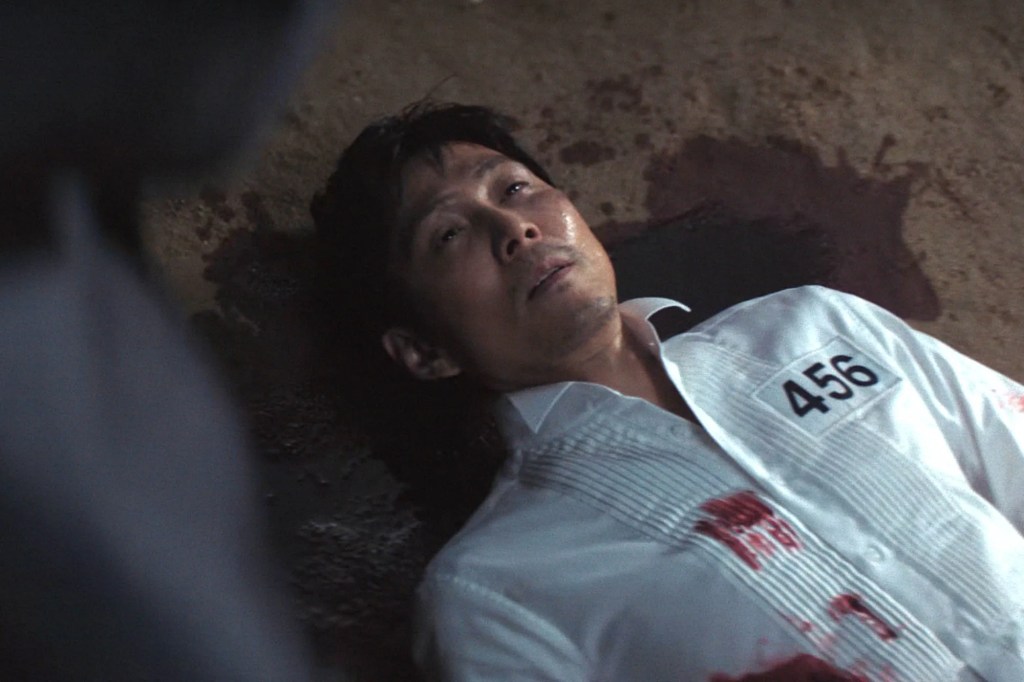
After failing to end the games in the finale of season two, Gi-hun resigns to survive instead of rebelling. A wrinkle is added when Player 222, Kim Jun-hee (Jo Yuri), gives birth during the games. The gamemakers insist that the infant is now a competitor in the games. This motivates Gi-hun to protect the baby girl and her mother. Sadly, Gi-hun ends her life in the jump rope game, knowing that she would not be able to make it, while trusting Gi-hun to ensure that her child makes it out alive. In the final game, Gi-hun is faced off against the baby’s father, Player 333, AKA Lee Myung-gi (Yim Si-wan), whose affection for his own kid is nonexistent compared to his greed for the prize money. Myung-gi stands in direct contrast to Gi-hun, whose only goal at this point is to keep the baby safe. Gi-hun could have easily disposed of Myung-gi and the infant, winning once again and gaining freedom and more fortune. But with a combination of detestation for the gamemakers and compassion for the innocent baby, his humanity convinces him of what the outcome should be. So, after Myung-gi dies while failing to kill Gi-hun and his child, Gi-hun sacrifices his own life so that the newborn can be crowned the winner and escape the island. The games continue, and as we learn in the final scene with Cate Blanchett, they appear to be spreading internationally.
Squid Game’s third season has a Rotten Tomatoes critic score of 79%. I tend to agree with most critics, believing that the finale gave a solid, if safe and heavy-handed, conclusion to the series. However, the audience score currently sits at 51%. According to many fans, Gi-hun’s death and the continuation of the games render this series pointless, since nothing changed. Yes, ultimately, Gi-hun’s sacrifice only ensured the safety of Jun-hee’s baby. But not every dystopian story needs to be Mockingjay with a societal change all for the better. Squid Game is bleak and uncompromising in its portrayal of the future, and that’s the point. Squid Game is about how capitalism cripples the lower classes. In a system designed to keep the rich rich and the poor poor, there is no escape. People like Gi-hun can try to change the system, but rebellion is futile if the masses are still clinging to the hope that they can come out on top like the 1% VIPs. After failing to ignite a successful revolution, Gi-hun only strives to give this pure child a promising future among his fellow competitors who are only out for financial security. It’s a downer of an ending and is suitably appropriate for a story with such a pessimistic view of society. The finale’s episode is literally titled “Humans Are…”. That ellipsis could be followed by any adjectives, and Squid Game argues that very few of those words would be positive.
Rue’s fate in Euphoria matches the show’s deception of addiction
Sam Levinson’s Euphoria is an American remake of the Israeli miniseries of the same name. It premiered with its pilot on HBO on June 16, 2019. For the first two seasons, Euphoria is a teen and psychological drama, chronicling the lives of a group of teenagers as they navigate drugs, sex, violence, and other things that are usually reserved for adults. The center of Euphoria is Zendaya’s Rue Bennett, a struggling drug addict. The third season makes a drastic change, jumping the timeline five years later and viewing the characters in more adult circumstances. In this season, Euphoria became more akin to a crime thriller or even a western. At this point in the story, Rue has largely overcome her addiction, but through circumstances revolving around her drug days, she is forced to be a drug mule for Laurie (Martha Kelly). Despite the tone and genre change, Euphoria maintains what it was all along, which is a melodrama. It is a sensationalized story with heightened emotions and grand situations. And boy, is season three of Euphoria heightened and grand.
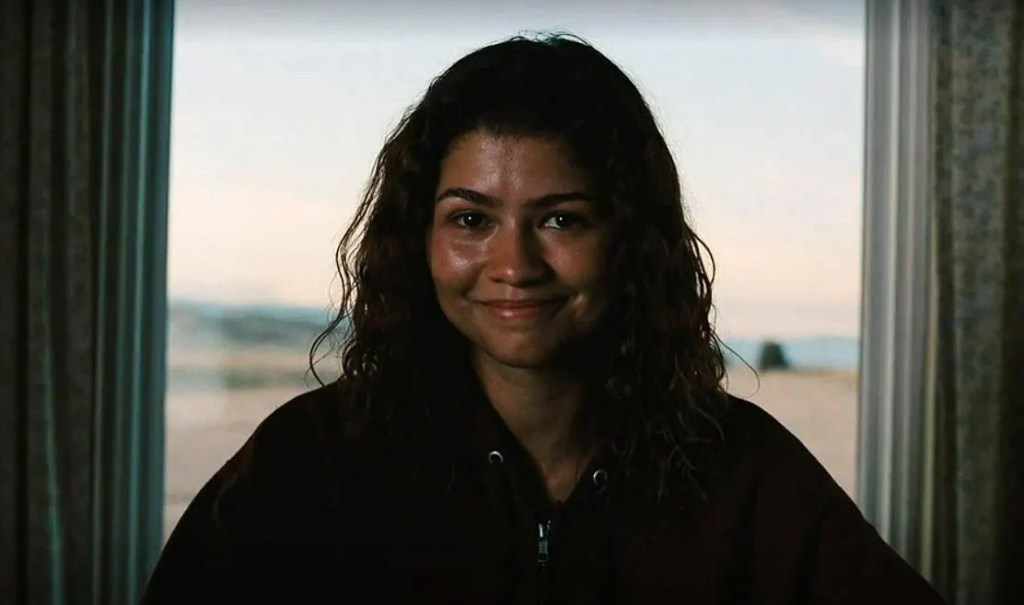
In the finale titled “In God We Trust”, it seems like Rue has finally escaped the consequences that her addiction brought upon her. She escapes the house of Laurie, and the Drug Enforcement Administration is planning on taking down both Laurie’s operations and the drug business of Alamo Brown (Adewale Akinnuoye-Agbaje), who Rue is working under. But after getting tipped off about Rue’s involvement with the DEA, Alamo has his right-hand man Bishop (Darrell Britt-Gibson) skirt the authorities’ planned drug bust. And just to twist the knife, Alamo sets up Rue by giving her a supposed capsule of Percocet to ease the pain she sustained while escaping Laurie. But the Percocet was actually laced with fentanyl, enough to kill Rue in her sleep. Rue dies in the house of her sponsor, Ali Muhammand (Colman Domingo), who then writes her name in his book of people he’s lost to addiction. This was set up in the prior episode, where a flashback reveals how Ali dealt with the loss of several of his fellow Narcotics Anonymous addicts who relapsed and died.
Euphoria’s third season has a Rotten Tomatoes critic score of 43%. Unlike the other three shows, its final season was not generally well received by critics. Most criticisms centered around the genre shift, the forced narratives that had little to do with each other, and the wasting of its young talented cast. The audience score is even worse at 38%. And while I largely agreed with the assessment of critics and fans, there were additional grievances that the fans had, specifically regarding the finale. According to these fans, Rue’s death was devastating but unnecessary and even cruel. The argument is that after having endured so much at a young age, Rue deserved a happy ending. There was also the complaint that putting out an addiction story that ends with death sends a bad message about the prospect of recovery and sobriety. Those two complaints, however, are missing the forest for the trees. The truth is that not everyone’s battle with addiction ends well. In fact, fentanyl is one of the leading contributors to opioid overdose in the United States. The reality is that Euphoria was never the kind of show that was going to give Rue a happy ending. If season one was the high from temptation, and season two was the low of it all, then season three was the fallout of having dared to bite into the apple. Rue’s growth into adulthood meant that even with her addiction behind her, it could still come back to dominate her life. Drug lords, trafficking, and Neo-Nazis are an exaggerated version of how bad it can get. But again, this is a melodrama about addiction. The message is clear: You can fight all you want for a better tomorrow, but sometimes you can’t escape your past. For a boundary-pushing show like Euphoria, ignoring this fact of life would be disingenuous.
The ambiguous ending of Eleven shows Stranger Things growing up
Stranger Things, created by The Duffer Brothers, premiered on Netflix on July 15, 2016, and quickly became the streamer’s flagship series and a part of the cultural zeitgeist. It’s easy to see why that is. The story, about the fictional town of Hawkins and its relation to an alternate universe called the Upside Down, is a loving homage to 1980s supernatural, horror, and coming-of-age films. That last one is key here. Because among all the fantastical elements of Stranger Things, this show is about the coming of age of Mike Wheeler (Finn Wolfhard) and his friends Will (Noah Schnapp), Lucas (Caleb McLaughlin), Max (Sadie Sink), and Dustin (Gaten Matarazzo). The newcomer in town, telekinetic Eleven (Millie Bobby Brown), is one of the inciting incidents and easily the most interesting and iconic character in the series. But Stranger Things is not her story.
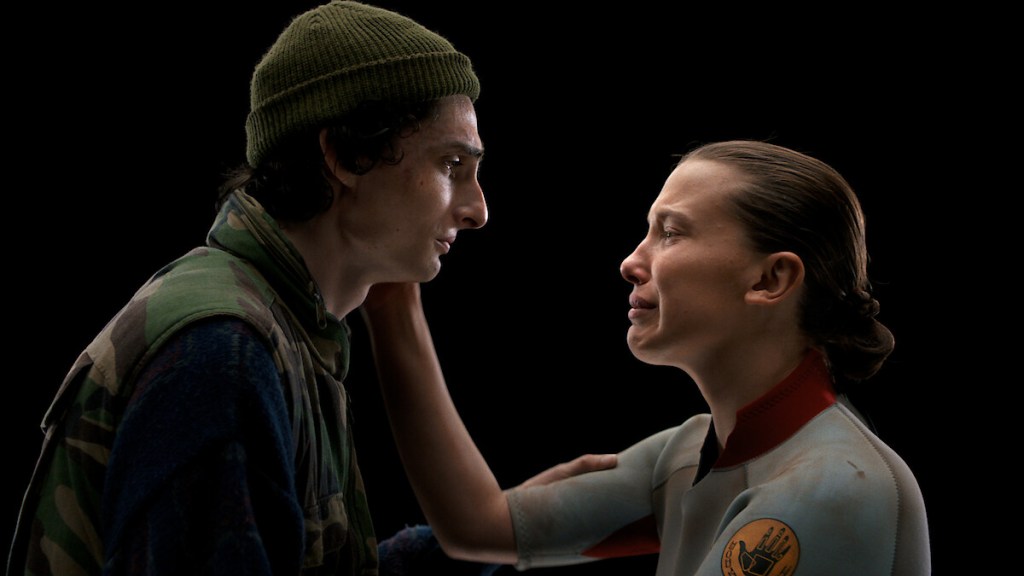
This is important to remember, as the finale, “The Rightside Up,” is largely centered on both Mike and Eleven. After the party kills the evil Vecna (Jamie Campbell Bower), the team is thrown a curveball when they are caught by Dr. Kay (Linda Hamilton) and her military unit. When the party looks for Eleven, they find her at the gate of the Upside Down. It appears that she intends to go with the plan suggested by her biological sister Kali (Linnea Berthelsen), which is to stay in the Upside Down as it is destroyed. This would prevent Dr. Kay from creating more weaponized children like Eleven and Kali. Now, this decision initially seems out of step for Eleven, especially after her adoptive father Jim Hopper (David Harbour) gave her a speech about how she deserved a long and happy life after saving Hawkins. But in the final scene of the finale, Mike theorizes that Eleven averted death, as she would not have been able to use her powers while the military unit’s technology was on. Mike speculates that Kali projected a mirage of Eleven sacrificing herself, allowing the real El to escape. Mike and his friends choose to believe that Eleven is still alive, although The Duffer Brothers ultimately leave it up to interpretation as to what actually happened to her.
Stranger Things’ fifth season has a Rotten Tomatoes critic score of 83%. I side with most critics on this matter, agreeing that this final season delivered an emotional and fitting sendoff, even if it was a step down from prior seasons. However, the audience score sits at 52%. Fans have criticized the season overall for its writing, which is a valid point. But when it comes to the finale, a loud number of fans criticized the ending for not giving Eleven the fate that she deserved with Mike. Like Rue, fans believe that Eleven had suffered so much as a child, and denying her a happy ending was unjust. Since their airing, many people have categorized Stranger Things, Euphoria, and Game of Thrones as series that unfairly killed off their female protagonist in the finale. But there are distinct differences between how all three shows handled their female hero’s conclusion. Game of Thrones clumsily rewrote Daenerys to be the villain at the last minute, while Euphoria brought Rue’s addiction full circle. As for Eleven…she’s not dead. Yes, Mike’s story was purely hypothetical. But in their tone and direction, The Duffer Brothers clearly want the audience to believe that Eleven is alive. There’s Hopper’s speech, Mike’s evidence, even a scene showing a free El walking in an unknown land, finally at peace. Mike and his four friends all say, “I believe”, the final words of the series, before leaving their game of Dungeons & Dragons. It’s actually pretty ironic that the fans took a cynical reading of Eleven’s fate and got mad about it, when Stranger Things was clearly trying to convince the audience to do the opposite. Yes, it’s sad that Eleven can no longer be with Mike or anyone from Hawkins. But in a moment of maturity, Eleven realizes that the safety of Mike and the rest of her found family is more important than being with him. Meanwhile, Mike, Will, Lucas, Max, and Dustin move forward in their lives while still holding Eleven in their hearts. This is a coming-of-age tale, where growing up means having to leave some things, and people, behind.
In the finale, The Boys stayed true to subverting superhero stories
The Boys, based on the comic book series of the same name, was developed by Eric Kripke and premiered with its first season on Amazon Prime Video on July 26, 2019. This was the same year that the superhero films reached their peak with successful blockbusters like Avengers: Endgame, Spider-Man: Far From Home, Captain Marvel, and Joker (All films grossed over $1 billion). The Boys came just at the right time as a satire of the superhero genre. Just as comic book films were beginning to exhaust the world, here comes a show to upend its tropes and comment on the fraught nature of superheroes. This is most reflected in the vigilante protagonist Billy Butcher (Karl Urban) and the central villain Homelander (Antony Starr). The main conflict of The Boys is the rivalry between Butcher, his team that gives the show its title, and Homelander, along with the corrupt superhero organization called Vought.
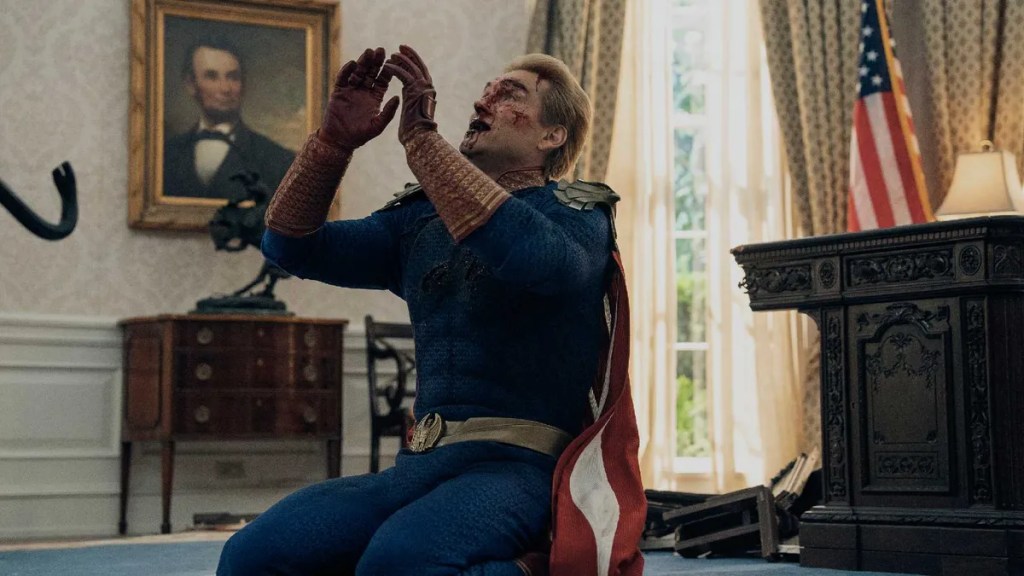
This clash between these two met its conclusion in the series finale titled “Blood and Bone”. The Boys infiltrate the White House to kill Homelander, who has ascended to being “god” of the United States after assassinating the president. The ambush is a success, with Kimiko Miyashiro (Karen Fukuhara) using her powers to strip Homelander of his super abilities. Rendered powerless, Homelander begs Butcher for mercy with crying and desperate pleading. Unfazed by this, Butcher kills Homelander with a crowbar, putting an end to the threat of his reign. Later, Butcher, distraught over the death of his dog and the estrangement of his son, attempts to release a virus at Vought Tower to eliminate all the government-sanctioned Supes. This plan is interrupted by Hughie Campbell Jr. (Jack Quaid), a member of The Boys, who appeals to Butcher’s affection for his friends and family long enough to fatally shoot Butcher.
The Boys’ fifth season has a Rotten Tomatoes critic score of 92%. I agree with the consensus being that these last episodes stayed true to the radical and satirical nature of the show, despite the season’s slow pacing. Meanwhile, the audience score sits at 49%, with opinions varying. There is a subsection of fans of the show who lambasted its political themes as “woke” after having previously toed the line between left- and right-wing arguments. This is the easiest complaint to refute, as this show has always been hugely critical of conservative values. While Homelander was created as an inverse of Superman, it is very clear to see him as being inspired by Donald Trump. Kripke himself has described the series as a “story about the intersection of celebrity and authoritarianism and how social media and entertainment are used to sell fascism.” Homelander is a political figure who uses his celebrity status to push his totalitarian agenda. While he has become the flagship character of the series, he is undeniably the villain and has been from the beginning.
Other fan criticisms of the finale included Homelander not flexing his superhuman and political powers, the continuing operations of Vought, and the lack of a spectacle for the final showdown between Homelander and Butcher. Fans’ evidence of these broken promises comes in the form of promotional material leading up to the final season. Most notably were posters that include Butcher in front of a destroyed Vought building, Homelander floating above the Earth while nuclear explosions go off on the planet, and Butcher confronting Homelander as the latter and multiple other Supes fly on top of the White House. Fans can accuse the posters of being false advertising, but the scenarios put across on them were ultimately more representative of the ideal endings for Butcher and Homelander. Butcher wanted Vought destroyed, while Homelander desired complete control and destruction. In the end, neither got what they wanted. The Boys is not a big-budget Marvel project where the good guys always dwarf the bad guys and save the day. This show is smaller, meaner, satirical, and more grounded. Seeing Homelander become pathetic without his powers is more gratifying than any special effects showdown could have accomplished. And the continuation of Vought’s operations is a grounded ending that ties into Butcher’s character arc. While Butcher wanted Vought destroyed, he came to realize that striving for the Supes’ deaths would make him the same as Homelander. In his final moments, he hung on to what mattered the most to him: his friends and family, not revenge.
“The end of a melody is not its goal: but nonetheless, had the melody not reached its end it would not have reached its goal either.” – Friedrich Nietzsche
When Michael Scott left The Office, I was upset that this hilarious character was leaving. And yet, I knew that his arc had reached its end. After years of trying to make Dunder Mifflin his family, he realized that his actual home is with his true love, away from Scranton. I had an emotional reaction to all four of these finales, and yet I was able to see that the character arcs and themes had come full circle. Gi-hun stepping off that ledge left me disillusioned. But I knew that he could rest knowing that he never lost sight of what was right and wrong. Rue grasping for her mother’s hand was devastating to watch. However, I saw that she was a cautionary tale always meant to end in tragedy. Seeing Eleven kiss Mike goodbye to the tune of Prince’s “Purple Rain” broke something in me. Yet, I found solace in that both she and the town of Hawkins would now be at peace. I was disappointed in Hughie for preventing Butcher from killing all of Vought. But after the fact, I realized that Hughie was right to stop what would have been the beginning of a worse future for everyone involved.
Sure, there could have been some variant of these endings where the games cease, Butcher and Homelander have an epic battle, Vought is destroyed, Mike and Eleven get married, and Rue is freed from Alamo and drugs. That’s clearly what the fans wanted. But just because they didn’t get their wish-fulfillment ending doesn’t mean that the resolutions we did receive were poorly done. As Eleven says at one point, “You don’t get to write the ending.”
There is nothing wrong with having an emotional reaction to a show. That’s a sign of an effective story. But using your emotional reaction purely as your framework for criticism is the opposite of media literacy. And to see fans lump valid criticism together with their unmet expectations strikes me as very narrow-sighted. There is a reason that critics were much more positive about these shows’ conclusions than fans were. And no, it’s not because critics are always right. It’s because they were looking at these stories from a narrative perspective and assessing if they accomplished what they set out to do. Squid Game, Euphoria, Stranger Things, and The Boys all did just that.
But this trend of fans using bad-faith criticisms to pan what are generally quality shows is becoming more common. In pop culture today, there is a real lack of understanding the difference between your emotional response to a story and the quality of said story. Viewers seem to be conflating the two, causing massive backlash to projects that are undeserving of it. It just seems like nobody wants to be challenged these days. If you had anything other than a positive reaction to a show, then it must be bad. If we feel bad, then it must be bad; It must be a Game of Thrones disaster. This perspective is shallow and completely antithetical to the power of storytelling. Stories should not always make us feel good. It is more important that a story is well constructed and makes a point. Power structures will keep the disenfranchised down. A war won doesn’t result in victory. Addiction cannot always be overcome. Growing up means leaving some things behind. Refusing these truths in favor of a fairy tale ending is ignorant, uninspired, and frankly boring.

